
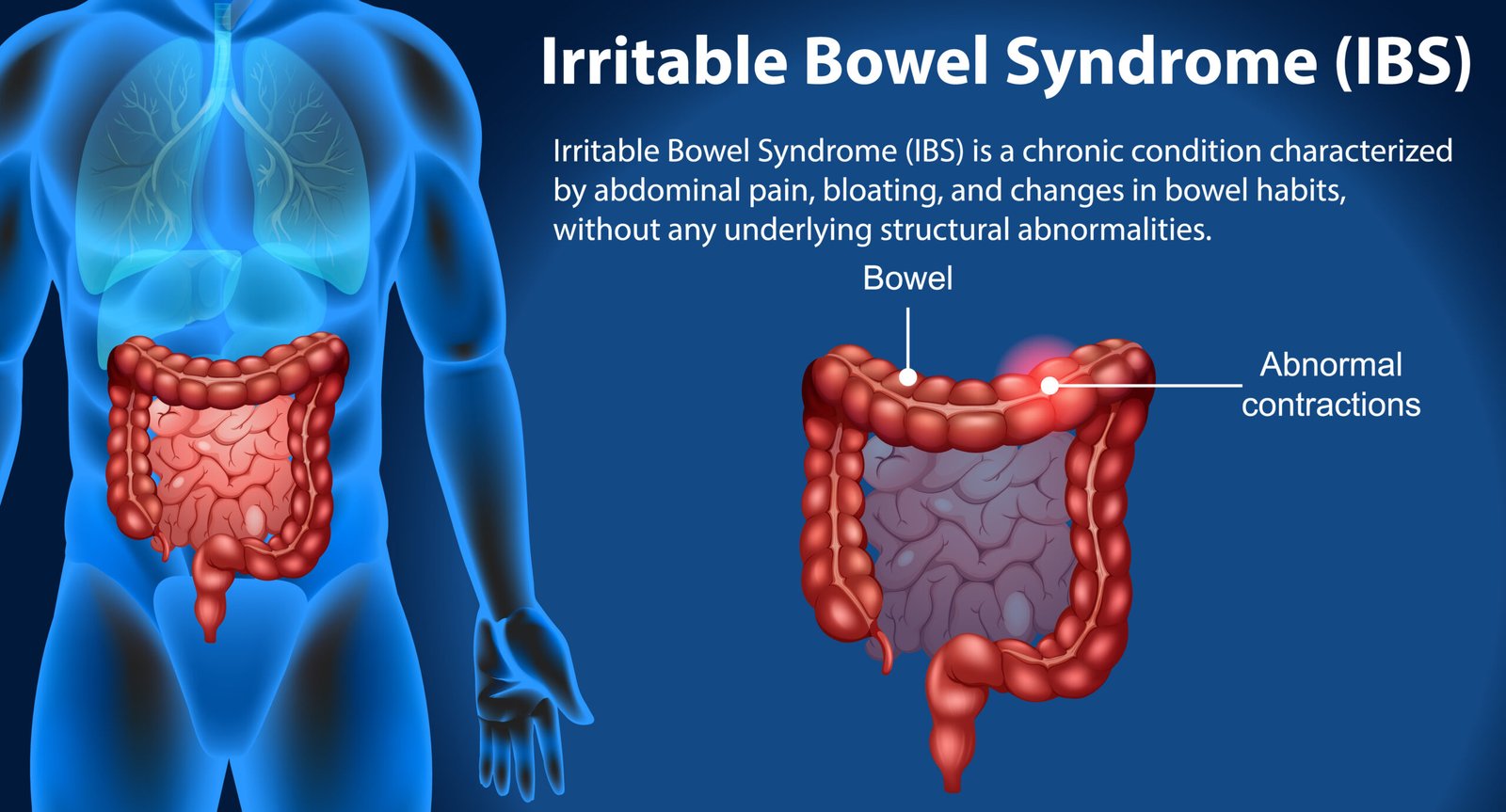
Irritable Bowel Syndrome (IBS) Infographic illustration
Irritable Bowel Syndrome (IBS) is a common digestive disorder that affects the large intestine . It is considered a functional gastrointestinal disorder, meaning the digestive tract appears normal but does not function as it should do. IBS can causes ongoing abdominal discomfort, changes in bowel habits, bloating, and other digestive symptoms.
Although IBS can significantly affect daily life and routine, it does not have capacity to permanently damage the intestines or increase the risk of colorectal cancer.
Millions of people worldwide experience IBS, and symptoms. The condition often requires long-term management through diet changes, stress reduction, lifestyle Modification, and, in some cases, medication.
Types of IBS
Healthcare providers classify IBS according to the most common bowel pattern:
IBS with Constipation (IBS-C)
People mainly experience hard, dry stools and infrequent bowel movements.
IBS with Diarrhea (IBS-D)
Frequent loose or watery stools are the primary symptom
Unclassified IBS (IBS-U)
Symptoms do not consistently fit into the above categories.
IBS with Mixed Bowel Habits (IBS-M)
Individuals alternate between constipation and diarrhea.
Note: This in only for information Purpose.






Leave a Reply